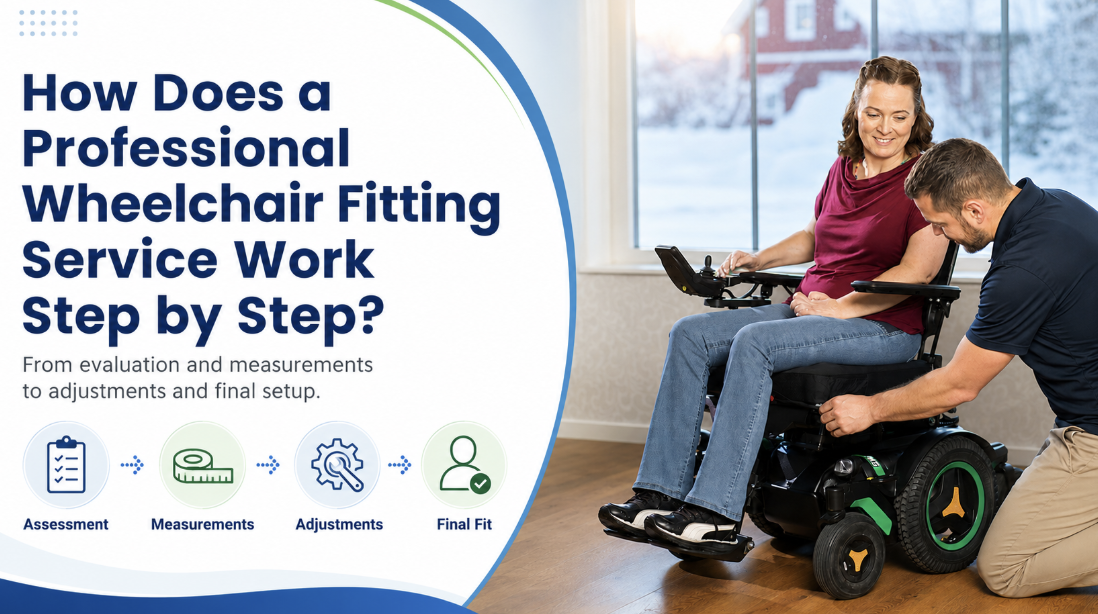
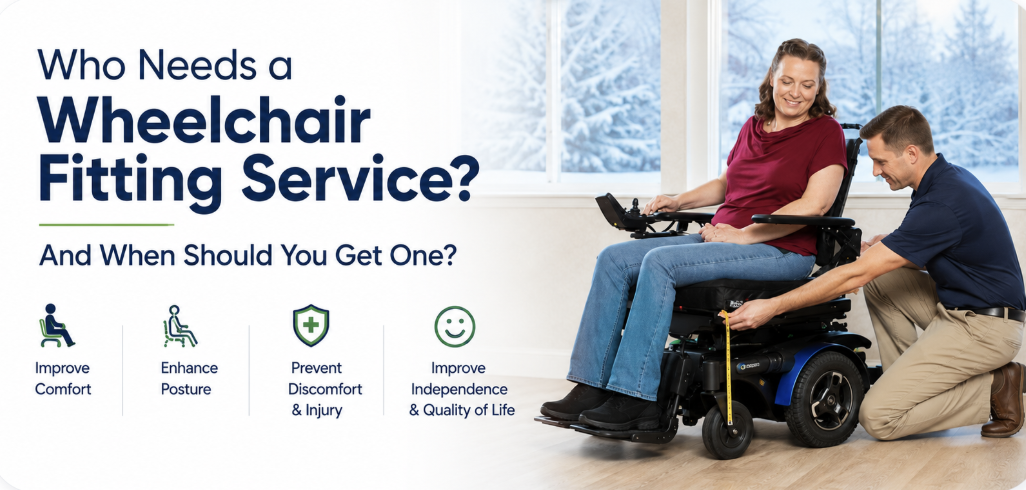
Who Needs Wheelchair Fitting Services?
You should consider a fitting if you have significant disabilities, a progressive condition, or need help with daily mobility. A tailored wheelchair meets your body and lifestyle. Proper fitting improves mobility, supports posture, and helps prevent problems caused by a poor fit.
Neurological conditions such as ALS, MS, or Parkinson's disease that alter mobility over time require a customised approach to wheelchair fitting.
Users with spinal cord injuries need precise seating and positioning to prevent pressure injuries and maintain posture long-term.
Joint deterioration affects posture and reach. A custom fit accounts for range-of-motion limitations and pain points.
If pain, sliding, or postural collapse is affecting daily life, a professional seating evaluation can identify and correct the root cause.
When Is the Best Time to Get a Wheelchair Fitting?
Get a fitting when a physician prescribes it, after a full evaluation, or when it's medically necessary. Book a fitting whenever you notice changes in mobility or health. Early intervention usually leads to better outcomes and greater comfort.
Common Triggers for Scheduling a Fitting
- → New or worsening medical diagnosis
- → Noticeable decline in mobility or balance
- → Onset of pressure sores or skin breakdown
- → Moving to a new home or work environment
- → Growth, weight change, or post-surgical recovery
- → Annual reassessment (at minimum once per year)
Why Proper Wheelchair Fit Matters
A correct wheelchair fit raises comfort, supports posture, and reduces the risk of pressure sores. A well-fitted chair also improves control and stability, which helps preserve independence. Proper fitting has a direct effect on quality of life.
"Measure it: Proper wheelchair fit is key to ensuring function while protecting skin integrity."
Health Risks of an Improper Fit
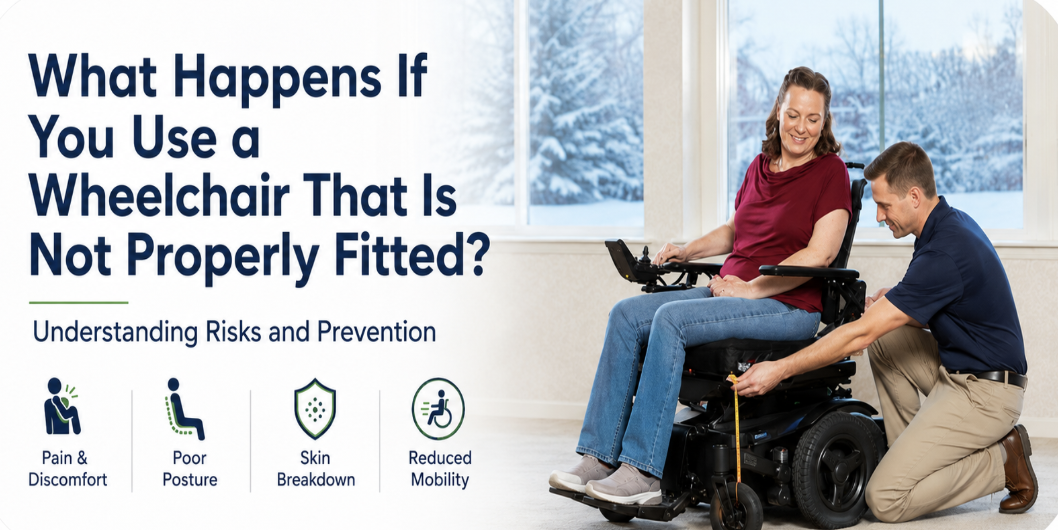
A poor fit can cause bad posture, pressure injuries, and reduced functional independence. It often leads to pain and discomfort that limit mobility. Knowing these health risks makes clear why professional fitting matters.
Consequences of an Ill-Fitting Wheelchair
Pressure Sores
Uneven pressure distribution damages skin and underlying tissue
Postural Collapse
Poor support leads to scoliosis, pain, and reduced lung capacity
Loss of Independence
Reduced function and mobility when the chair doesn't support the user's abilities
Source: Mikołajewska E. (2017). Harmful results of improperly fitted wheelchair — case study.
What Is Involved in the Custom Wheelchair Fitting Process?
A custom fitting includes a clinical interview, a physical assessment, and final adjustments. This thorough process ensures the wheelchair is matched to the user's specific needs.
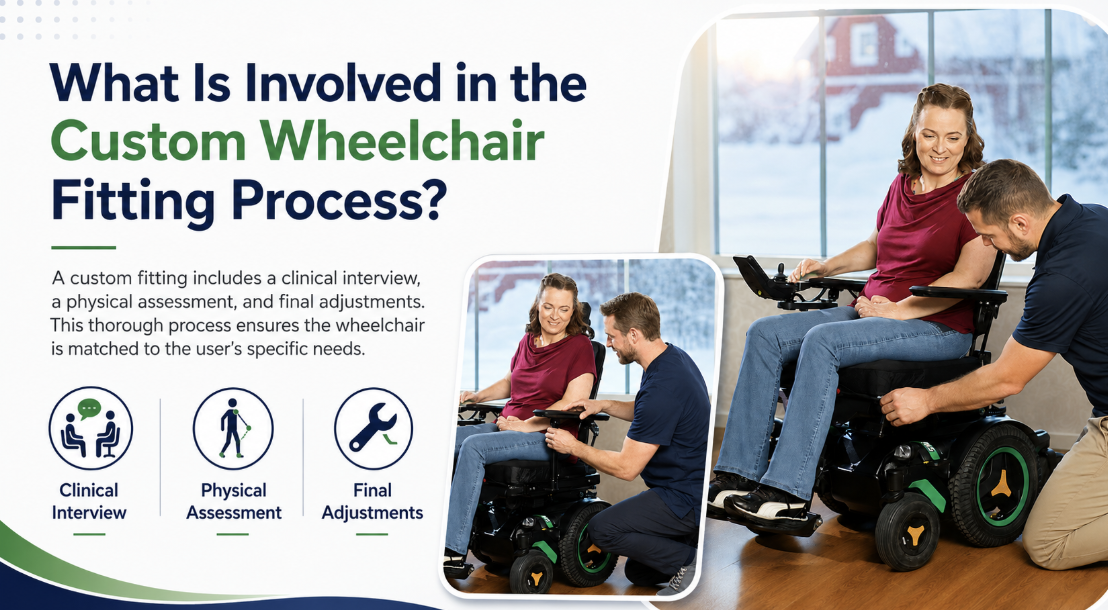
Step 1: Clinical Interview
Your clinician reviews your medical history, daily activities, and home environment to understand your functional goals.
Step 2: Physical Assessment
A hands-on physical exam measures posture, range of motion, strength, and skin condition to determine exact seating requirements.
Step 3: Final Adjustments
The chair is configured, tested, and fine-tuned. Pressure mapping may be used to verify even distribution and prevent skin breakdown.
The Role of Wheelchair Prescription Guidance
Prescription guidance confirms medical necessity and specifies custom features that match your abilities. A physician's prescription is typically required for Medicare and insurance coverage. Clear prescription guidance streamlines the fitting and improves outcomes by ensuring the equipment ordered exactly matches the clinical recommendation.
Benefits of a Proper Wheelchair Fit
A proper wheelchair fit delivers better comfort, greater mobility, and improved health outcomes. Here is a summary of the key benefits:
| Benefit | Description | Impact Level |
|---|---|---|
| Improved Comfort | Proper fitting enhances user comfort and reduces chronic pain | High |
| Enhanced Mobility | Customized wheelchairs improve independence and functional reach | High |
| Pressure Sore Prevention | Even pressure distribution and optimised posture reduce skin breakdown risk | High |
| Better Posture | Supports spinal alignment, reduces fatigue, and improves respiratory function | High |

Custom vs. Standard Wheelchair Options
Custom fittings provide a personalised fit, better postural support, and adaptability to specific medical needs. These benefits make them preferable to off-the-shelf options for users with progressive conditions, postural challenges, or complex medical requirements. Standard chairs are built to average dimensions and offer limited adjustability — they may be appropriate for short-term or low-complexity needs, but they are rarely the right long-term solution for someone with a chronic condition.
Is Wheelchair Fitting Covered by Insurance?
Many insurance plans, including Medicare and Medicaid, may cover fittings when they are medically necessary. Coverage varies by policy and condition. You will typically need a physician's prescription and documented medical necessity. Contact your insurance provider or reach out to our team — we can help verify your benefits and walk you through the process.
Learn more about insurance support →Frequently Asked Questions
What should I expect during a wheelchair fitting appointment?
How often should I have my wheelchair fitted or reassessed?
Can I use my wheelchair without a fitting service?
What types of wheelchairs can be fitted through these services?
Are wheelchair fitting services covered by insurance?
What should I do if I experience discomfort after a fitting?
Clinical Sources:
- Sprigle S. (2014). Measure it: Proper wheelchair fit is key to ensuring function while protecting skin integrity.
- Mikołajewska E. (2017). Harmful results of improperly fitted wheelchair – case study.