Risks and Consequences of an Ill-Fitting Wheelchair
An improperly fitted wheelchair raises several health risks, mainly affecting posture and skin integrity. Users and caregivers should understand these risks to take timely action.
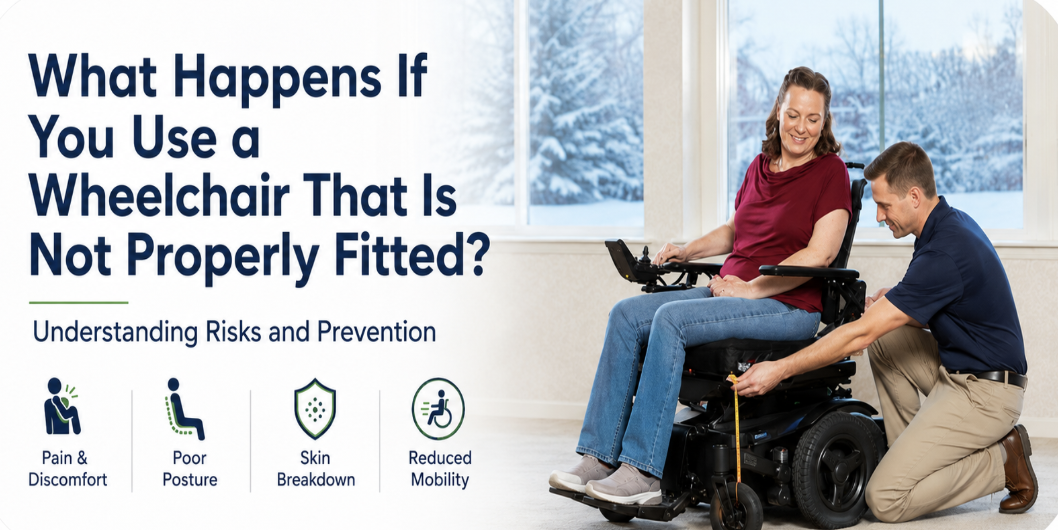
Four Key Consequences of a Poor Fit
Pain & Discomfort
Muscle fatigue, strain, and chronic pain from inadequate support
Poor Posture
Spinal misalignment, scoliosis, and reduced lung capacity
Skin Breakdown
Pressure sores and wounds at bony prominences
Reduced Mobility
Loss of independence when the chair limits function
Posture Problems from a Poor Wheelchair Fit
A poor fit can cause muscle fatigue, strain and discomfort. Over time this may lead to deformities and chronic pain. Ensuring the wheelchair is tailored to the user's needs helps prevent these outcomes.
"Current wheelchair specifications and adjustments seem to inhibit a postural correction towards upright sitting and fail to provide sufficient lateral support. Both an examiner's classification and subjects' evaluation of asymmetric sitting are necessary to obtain a sufficient knowledge base for subsequent adjustment."
Proper postural support is not cosmetic — it directly impacts respiratory function, digestion, upper extremity reach, and fatigue levels throughout the day. When a wheelchair fails to hold the pelvis in a neutral position, the entire kinetic chain is affected.
Pressure Sore Risks
One of the most serious risks of an ill-fitting wheelchair is pressure sores. These develop when prolonged pressure affects bony areas. High-risk spots include the sacrum, heels and hips. Without proper support and regular repositioning, pressure sores can form quickly and cause severe complications.
Clinical Research Note
Medical literature documents that wheelchair users are predisposed to pressure ulcers due to sustained ischial and sacral interface pressures resulting from prolonged periods of sitting. Implementation of pressure-relieving interventions — including specialized seating systems engineered to redistribute load and augment the weight-bearing surface area — is critical for mitigating risk.
Source: Custom-contoured cushion fabrication based on pressure mapping for wheelchair users to prevent pressure ulcers (2025)
For more information on managing and preventing this condition, visit MES Mobility's resource on pressure sores.
Skin Breakdown
Constant pressure without adequate support can cause skin breakdown. That damage may lead to infection and other serious issues. Regular checks of skin integrity are vital to prevent these complications.
Signs and Symptoms of Pressure Sores
Knowing the signs of pressure sores enables earlier treatment and better outcomes.
Persistent redness that does not fade when pressure is removed. The skin is intact but discolored. Act immediately — this is the most reversible stage.
Blisters or shallow open sores showing deeper skin breakdown. Medical attention is required to prevent infection and progression to more severe stages.
Prevention Strategies
You can reduce risks from a poor fit by focusing on proper fitting and routine maintenance. The following strategies form a comprehensive prevention framework.
Proper Custom Fitting
A custom fit is the foundation of comfort and support. A well-fitted wheelchair improves posture and lowers the chance of pressure sores. The process should include a full assessment of body measurements and any medical needs. Learn about our fitting process →
Pressure Mapping Technology
Pressure mapping identifies high-pressure areas so you can adjust the chair or choose a different cushion. It helps caregivers confirm the user is well supported and reduces the risk of skin breakdown. Learn about pressure mapping →
Power Tilt and Recline Features
Power tilt and recline let users redistribute pressure and relieve stress on vulnerable areas. Clinical guidelines recommend pressure reliefs every 15–30 minutes for users who cannot perform independent weight shifts. Regular use of these features improves comfort and helps prevent pressure sores.
Regular Skin Monitoring
Check skin frequently. Caregivers should watch for early signs of pressure sores or skin damage and act quickly to prevent more serious problems. Daily visual inspection of the sacrum, hips, and heels is best practice.
Cushion Selection: A Critical Decision
Selecting the right cushion is one of the most impactful decisions in preventing skin breakdown. Advanced materials can improve comfort and provide better support tailored to the user's risk profile.
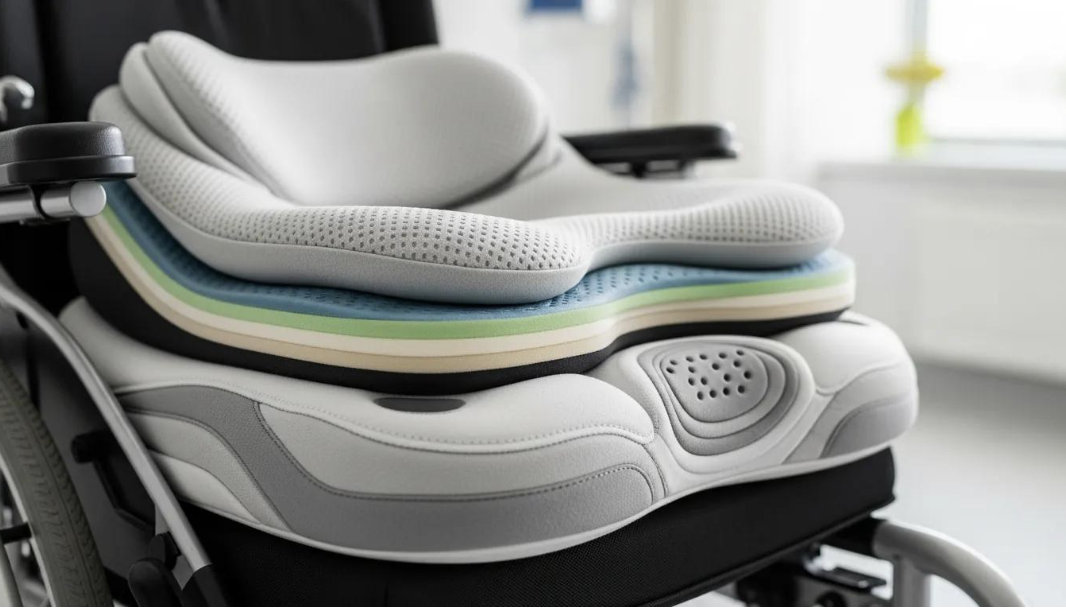
| Cushion Type | Best For | Pressure Relief |
|---|---|---|
| High-Density Foam | Low-risk users, stable posture | Moderate |
| Gel/Fluid | Moderate risk, transfers | Good |
| Air Flotation (ROHO) | High-risk, SCI, full-time users | Highest |
| Custom Contoured | Complex deformities, unique anatomy | Highest |
Custom Fitting Solutions
Custom fitting solutions ensure wheelchair users receive the right support for their bodies and needs. Ongoing advances in custom wheelchair design continue to improve mobility, comfort and overall quality of life.
"Custom wheelchairs, tailored to users' unique needs, have gained increasing attention because of their potential to increase mobility, comfort, and overall quality of life. Technological advances have seen the move from manual, time-consuming customization processes to digital workflows with support of design tools — including 3D scanning, parametric modeling, and finite element analysis."
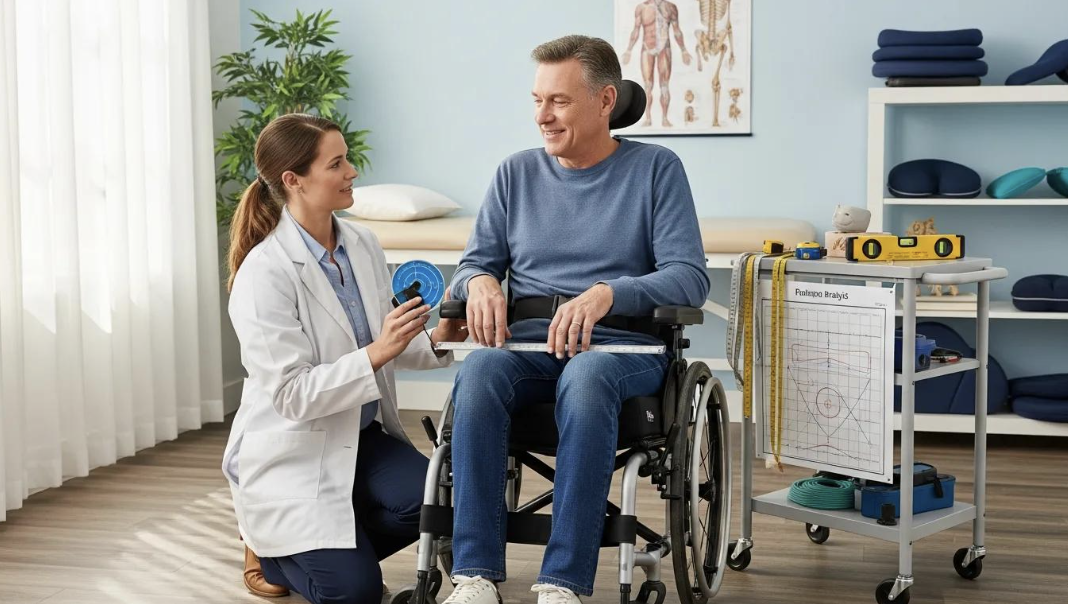
Clinical Seating Evaluations
Clinical seating evaluations measure posture, strength and specific needs so the wheelchair matches medical requirements. Good evaluations lead to better function and mobility.
Dynamic Positioning
Helps manage swelling and boost circulation. Adjusting position throughout the day promotes blood flow and lowers pressure sore risk.
Cushion Optimization
Select cushions that distribute weight evenly and reduce pressure on vulnerable areas. Advanced materials improve comfort and provide better support.
Personalized Assessment
Clinical evaluations assess the user's needs and adjust the wheelchair accordingly. This tailored approach increases comfort and ensures the chair meets specific requirements.
Why Is Custom Wheelchair Fitting Important for Mobility and Health?
A correct custom fit prevents health issues and supports better mobility. It helps users stay independent and perform daily activities with less discomfort. The table below summarises why proper fitting has such a high impact across multiple health outcomes.
| Health Outcome | Risk with Poor Fit | Benefit of Proper Fit |
|---|---|---|
| Skin Integrity | Pressure sores, wound infection | Even pressure distribution, preserved skin |
| Spinal Alignment | Scoliosis, chronic back pain | Neutral pelvic position, upright posture |
| Respiratory Function | Reduced lung capacity from slouching | Improved thoracic expansion |
| Independence | Reduced function, caregiver dependence | Full functional reach and control |
Ready to Get Properly Fitted?
Our RESNA ATP-certified team provides comprehensive clinical seating evaluations and custom wheelchair fittings across Florida. We handle the full process — from physician coordination to insurance verification.
Schedule a free consultation →Frequently Asked Questions
What are the signs that a wheelchair is not properly fitted?
How often should wheelchair fittings be reassessed?
What role do caregivers play in wheelchair fitting and maintenance?
What are the benefits of using pressure mapping technology?
How can dynamic positioning features improve wheelchair user health?
What should users look for in a wheelchair cushion?
Clinical Sources:
- Gutierrez E. (2003). Clinical evaluation of seating in persons with complete thoracic spinal cord injury.
- Custom-contoured cushion fabrication based on pressure mapping for wheelchair users to prevent pressure ulcers (2025).
- More S. (2025). Customization of manual wheelchair components: a state-of-the-art review.