
How to Talk to a Doctor About Getting a Power Wheelchair
Many patients and caregivers wait too long to ask their doctor about a power wheelchair, often struggling with dangerous falls, severe fatigue, and isolation in the meantime. Starting the conversation clearly and providing specific examples is the best way to get the process moving.
Caregiver Tip: Keep a Mobility Journal
Keep a journal of falls, near-falls, and the specific daily activities (like getting to the bathroom in time or preparing a meal) that have become dangerous or impossible. Bring this journal to the doctor's visit to provide concrete evidence of medical necessity.
Your primary care doctor does not need to be an expert in wheelchairs. Instead of asking them to prescribe a specific chair, ask them directly: "Can you write an order for a Seating and Mobility Evaluation with a Physical Therapist?" This order initiates the formal, expert-led process.
When speaking to the doctor, focus heavily on in-home activities. Medicare bases its coverage decisions on the patient's ability to perform Mobility Related Activities of Daily Living (MRADLs) inside their home. If you only talk about wanting to go to the park, the claim may be denied.
What Is a Seating and Mobility Evaluation?
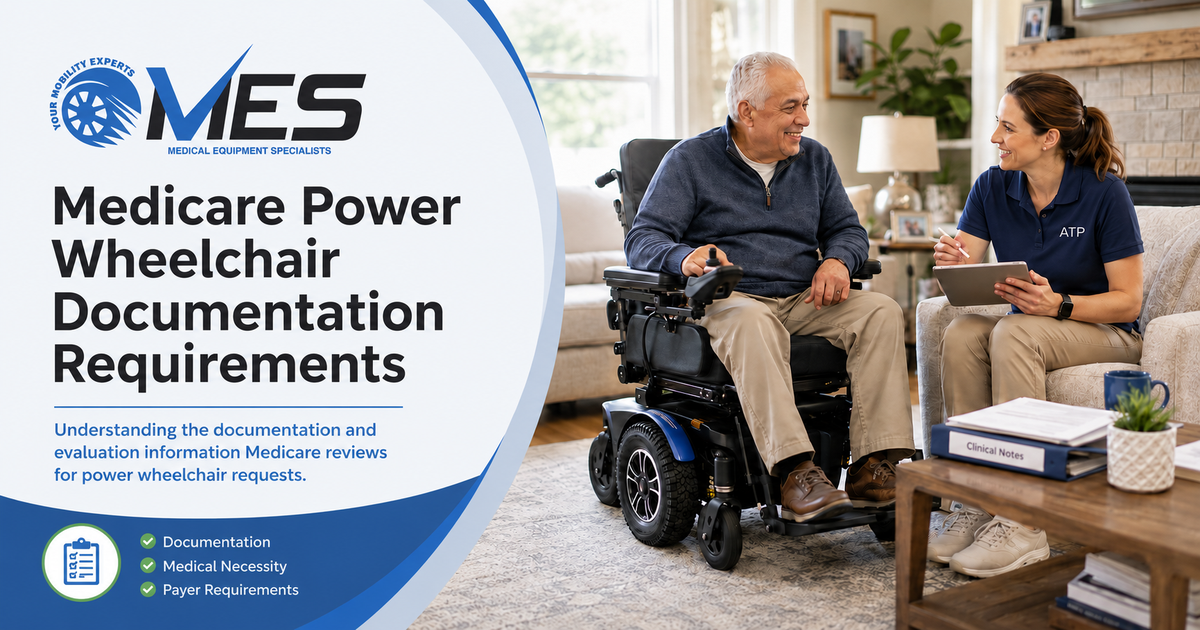
When a physician determines that a patient needs a complex power wheelchair, Medicare and private insurers require a rigorous clinical assessment before approving the equipment. This assessment is known as a Seating and Mobility Evaluation.
Who Attends the Evaluation?
The evaluation typically takes between one and two hours. Your presence is vital. You can provide realistic context about the home environment (doorway widths, thresholds) and realistic insights into your loved one's daily stamina. Your input helps the clinical team configure a chair that works in the real world, not just in the clinic.
What to Expect on Power Wheelchair Delivery Day
After weeks or months of evaluations and insurance approvals, delivery day is finally here. This is not a simple drop-off; it is a comprehensive fitting and training session.
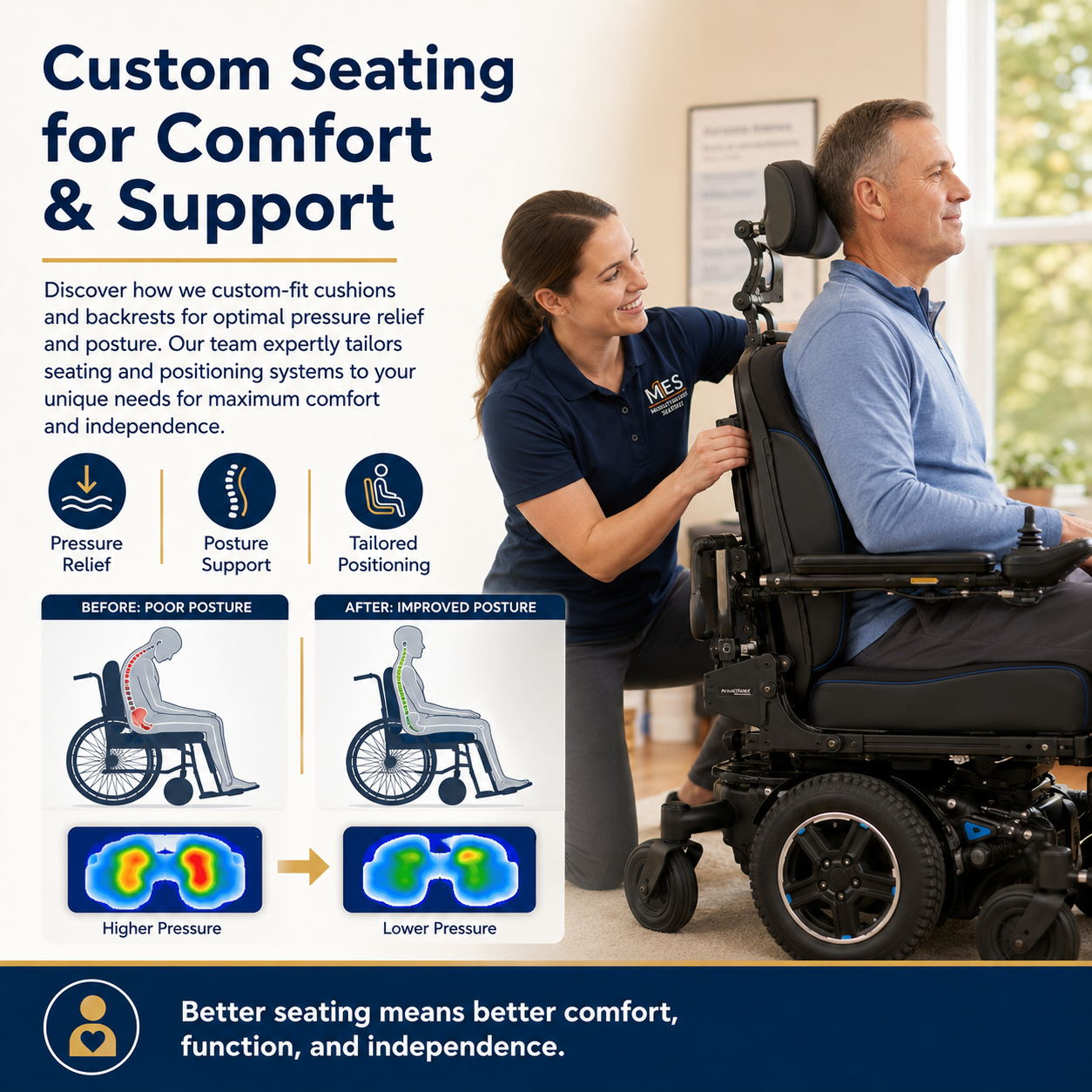
On delivery day, the ATP and a technician from the DME supplier will bring the chair to your home. They will transfer the patient into the chair and make micro-adjustments to the seat depth, backrest angle, armrest height, and footplate positioning. These adjustments ensure optimal posture and pressure relief.
"Delivery day is about ensuring perfect posture and absolute confidence. Do not let the technician leave until both you and the patient feel 100% comfortable operating the chair, charging the batteries, and understanding the safety features."
Essential Power Wheelchair Safety Tips for Caregivers
Power wheelchairs are heavy, powerful pieces of equipment. While they provide incredible independence, they must be operated safely to prevent injury to the user, the caregiver, and the home environment.
-
Crucial Transfer Protocols
Always ensure the chair is completely turned OFF before initiating a transfer. If the chair is left on, an accidental bump of the joystick by the patient's arm or your body can cause the chair to lurch forward, resulting in a severe fall and potential injury to both of you.
-
Environmental Awareness
Be acutely aware of your surroundings, especially uneven terrain, thick carpets, and steep inclines. Ensure the patient's feet are securely positioned on the footplates before moving, as dragging feet can cause severe lower leg injuries.
-
Battery Management
Establish a strict charging routine. Power wheelchair batteries should typically be charged every night, regardless of how much they were used during the day. Never let the batteries drain completely, as this significantly reduces their lifespan.
Verified Clinical Sources:
- [1] Medical Equipment Specialists. "How to Get Evaluated for a Custom Power Wheelchair." Read source