
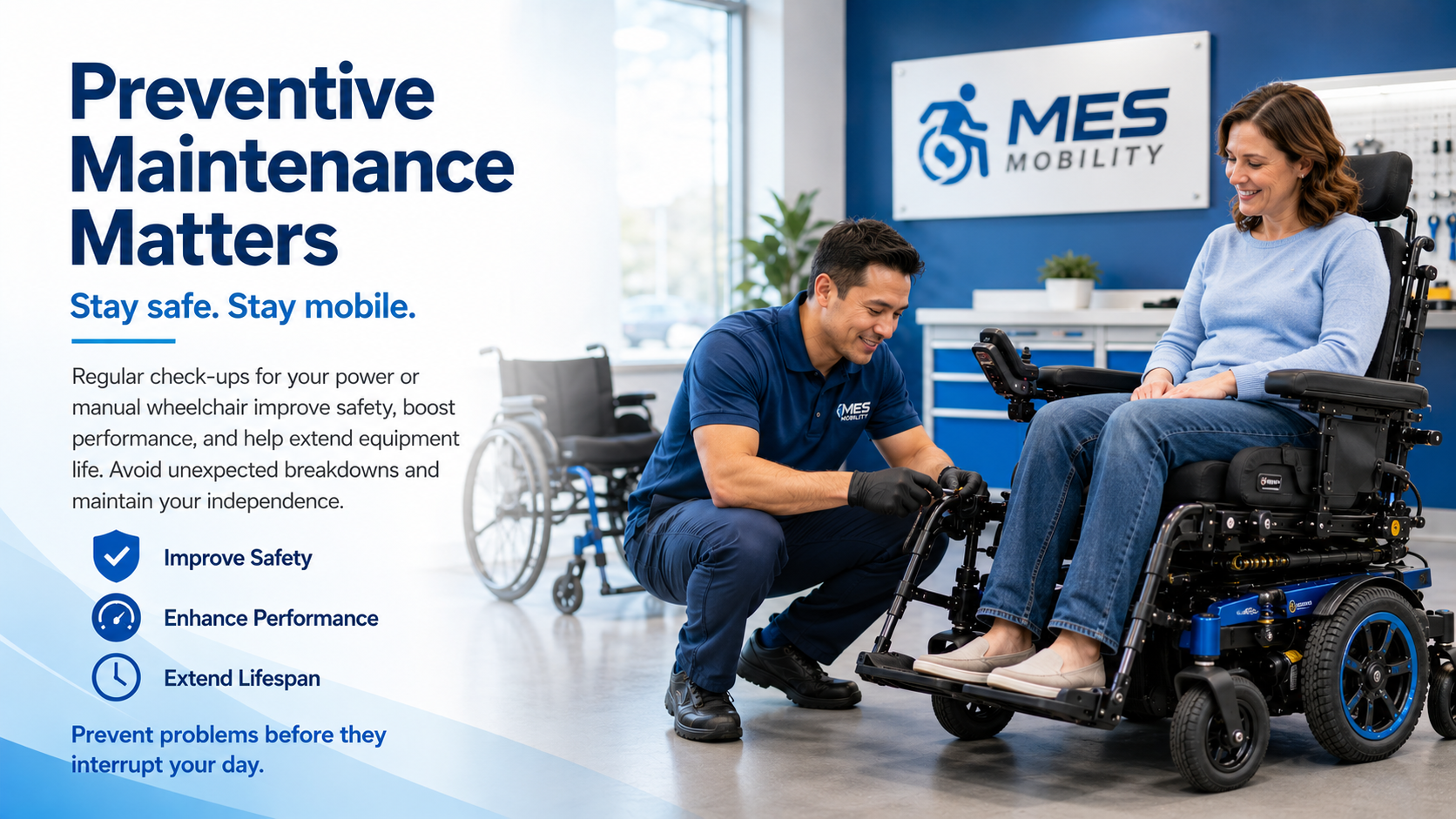
The Importance of Precision in Power Wheelchair Repair
A power wheelchair is much more than a chair with a battery. It is a highly sophisticated piece of medical equipment, relying on complex computer systems, sensitive electronics, and heavy-duty mechanical parts working in perfect unison. When one component fails, it can leave a user stranded or compromise their safety.
Our technicians approach every repair with the mindset that they are not just fixing a machine; they are restoring a person's independence. This requires a level of precision and diagnostic expertise that goes far beyond basic mechanical repair.
Diagnosing Intricate Joystick and Electronics Problems
The joystick and control module act as the "brain" of the power wheelchair. They translate the user's physical movements into electronic signals that control speed, direction, and power seating functions.
Tech Insight: Error Codes
When a power chair stops working, the joystick will often flash a sequence of lights or display an error code. Our technicians use advanced diagnostic tools to read these codes, which can pinpoint issues ranging from a loose wire in the armrest to a critical failure in the main control board.
Common electronic repairs include:
-
Joystick Replacement or Calibration Fixing joysticks that pull to one side, fail to respond, or have damaged gimbals.
-
Wiring Harness Repairs Tracing and replacing pinched or frayed wires that disrupt communication between the joystick and the motors.
Addressing Motor and Gearbox Failures
The motors and gearboxes endure the most physical stress of any component on a power wheelchair. They must generate enough torque to move hundreds of pounds up inclines, over thresholds, and across uneven terrain.
When a motor begins to fail, users might notice a grinding noise, a burning smell, or the chair pulling sharply to one side. Our technicians perform thorough mechanical inspections, checking carbon brushes, gear wear, and electromagnetic brake engagement. Often, replacing a worn motor or rebuilding a gearbox is the only way to ensure the chair operates safely and efficiently.
Battery Diagnostics: More Than Just a Charge
Battery issues are the number one reason for service calls. However, simply dropping in new batteries is rarely the correct approach without proper diagnostics.
Load Testing
A battery might show a full 24 volts on a standard multimeter, but immediately drop to zero under the load of the motors. We use specialized load testers to measure the true capacity of the batteries.
Charger Verification
Sometimes the batteries are fine, but the charger has failed. We test the charger's output to ensure it is delivering the correct voltage and amperage to properly maintain the batteries.
Preventative Maintenance: Stopping Problems Before They Start
The best repair is the one that never has to happen. Regular preventative maintenance can extend the life of a power wheelchair by years. During a routine service check, our technicians will:
- Inspect and tighten all hardware and seating components.
- Clean the joystick gimbal and control modules to prevent sticking.
- Check tire tread depth and inflate pneumatic tires to the correct pressure.
- Lubricate moving parts in the suspension and caster forks.
- Perform a complete diagnostic scan of the electronics.
If your power wheelchair is making unusual noises, losing charge quickly, or displaying error codes, do not wait until it leaves you stranded. Contact our repair team to schedule a diagnostic evaluation.