
Power Wheelchair vs. Manual Wheelchair: How to Choose
A manual wheelchair is typically recommended for individuals who have the upper body strength and cardiovascular endurance to propel themselves efficiently throughout the day without experiencing excessive fatigue or pain. They are lighter, easier to transport, and require less maintenance.
However, a power wheelchair becomes medically necessary when a patient cannot propel a manual wheelchair independently, or when doing so causes severe fatigue, pain, or puts them at risk of injury. Power wheelchairs are essential for patients with progressive neurological conditions (like ALS or MS), severe arthritis, or spinal cord injuries.
Clinical Warning: Joint Preservation
Long-term use of a manual wheelchair can lead to severe repetitive strain injuries in the shoulders and wrists if the user's strength is compromised. If propelling a manual chair causes pain or leaves you too exhausted to participate in daily activities, it is time to evaluate for power mobility. Power mobility isn't giving up; it's gaining back the energy you need to live your life.
What Is a Complex Rehab Technology (CRT) Wheelchair?
When most people think of a power wheelchair, they picture a standard, scooter-like device with a basic "captain's chair" seat. While these standard chairs are adequate for individuals who simply lack the endurance to walk, they are entirely insufficient for patients with complex medical needs. This is where Complex Rehab Technology (CRT) comes in.
Custom Seating
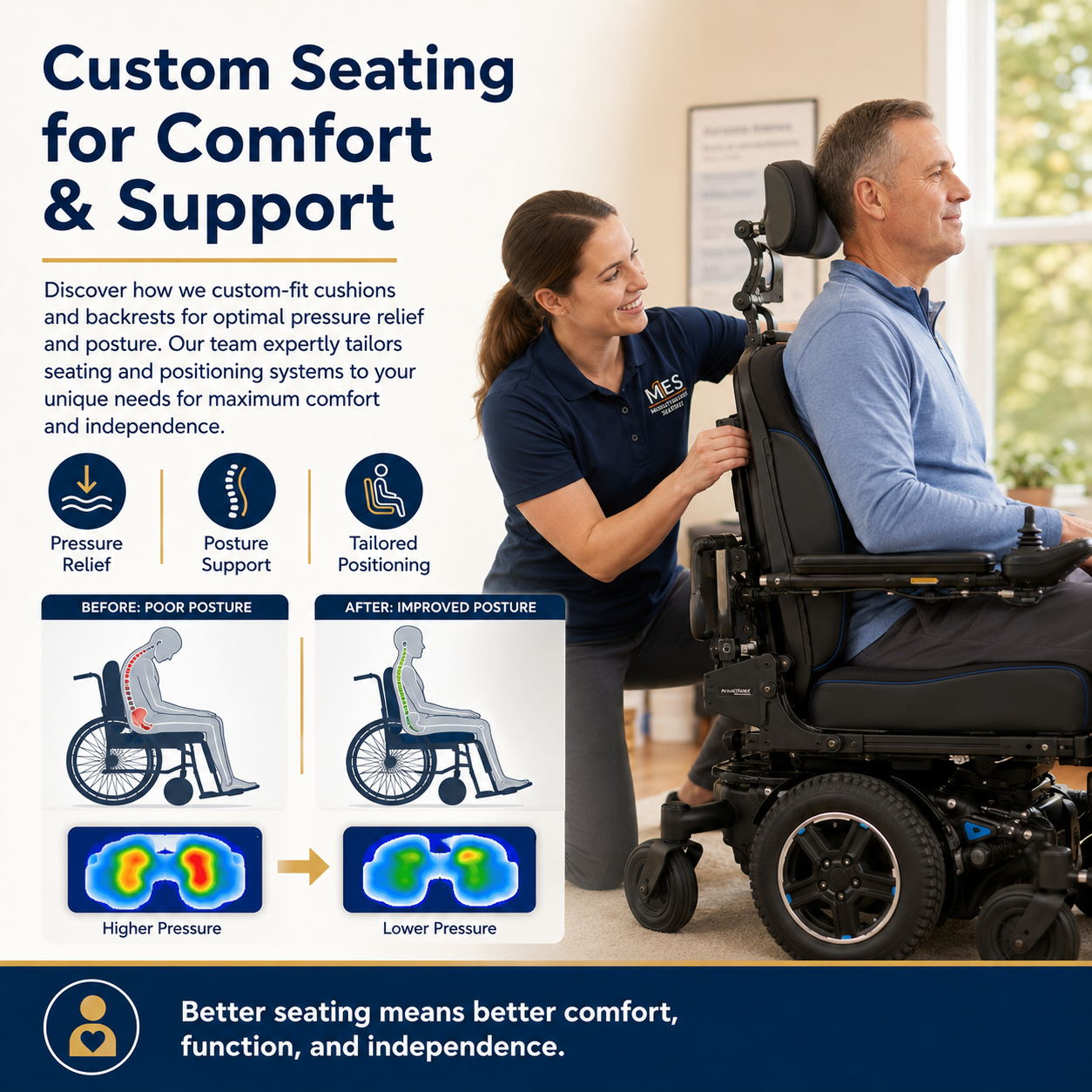
Individually configured cushions and backrests designed to correct posture, accommodate deformities, and prevent life-threatening pressure injuries.
Power Positioning
Mechanical tilt, recline, or leg elevation systems that allow patients who cannot shift their own weight to independently relieve pressure and manage pain.
Alternative Drives
Advanced electronics that allow the user to operate the chair using head movements, breath (sip-and-puff), or even eye gaze technology.
Power Wheelchair Groups Explained
Medicare uses a specific coding system to categorize power wheelchairs into "Groups." Understanding these groups is essential, as they dictate not only the features of the chair but also the medical criteria you must meet to qualify for coverage.
-
1&2Standard Power Chairs
Intended for patients who have mobility limitations preventing them from performing daily activities, but who can safely sit upright without advanced postural support. They have basic seating and standard joysticks.
-
3Complex Rehab Technology (CRT)
To qualify, a patient must have a specific neurological condition, myopathy, or congenital skeletal deformity. These chairs support advanced power seating functions, custom molding, and alternative drive controls.
-
4Enhanced Capabilities
Offer enhanced capabilities, including improved suspension and faster motors for outdoor use. Note: Medicare rarely covers Group 4 chairs, as their primary requirement is for use inside the home.
What Diagnoses Qualify for a Power Wheelchair?
Medicare does not cover power wheelchairs based simply on old age or general weakness. Coverage is strictly based on "medical necessity," meaning the patient has a specific medical condition that severely impairs their ability to participate in mobility-related activities of daily living (MRADLs) within their home.
While standard power wheelchairs can be prescribed for severe arthritis or COPD, Complex Rehab Technology (Group 3) chairs require a more specific diagnosis. Qualifying diagnoses include:
"Having a diagnosis is the first step, but the clinical documentation must prove exactly how that diagnosis prevents you from moving safely in your home. The diagnosis opens the door; the physical evaluation secures the chair."
Step-by-Step: How to Get a Power Wheelchair Covered
Securing coverage for a power wheelchair through Medicare is a complex, highly regulated process. Here is the exact path you must follow:
The Face-to-Face Visit
Schedule an in-person exam with your doctor specifically to discuss your mobility limitations. Your doctor must document why lesser devices (like a cane, walker, or manual wheelchair) do not work for you.
The Clinical Evaluation
Undergo a comprehensive Seating and Mobility Evaluation by a licensed physical or occupational therapist. They will test your strength, posture, range of motion, and home environment accessibility.
ATP Assessment & Equipment Selection
An Assistive Technology Professional (ATP) translates the therapist's clinical findings into specific equipment recommendations, selecting the exact model, cushion, and drive controls.
Prior Authorization
Your DME supplier submits the complete documentation packet to Medicare for review before ordering the chair. This protects you from unexpected bills. CMS requires prior authorization for many high-cost items, specifically Group 3 complex rehab power chairs.
Important Timeline Warning
The face-to-face physician visit must occur within six months of the supplier submitting the prior authorization request to Medicare. Do not delay your seating evaluation once you have the doctor's prescription, or you may have to start the entire process over.
Exploring Alternative Drive Controls
The vast majority of standard power wheelchairs are operated using a standard proportional joystick. This requires a certain level of fine motor control, grip strength, and range of motion in the hand and arm. When a patient cannot use their hands (due to advanced ALS, high-level SCI, or severe stroke), CRT allows for "Alternative Drive Controls." These sophisticated systems translate different body movements into driving commands.
Head Array
Sensors embedded in the headrest detect head movement. Leaning back drives the chair forward, leaning to the sides turns the chair. Ideal for patients with good head control but limited arm movement.
Sip-and-Puff
The patient inhales (sips) or exhales (puffs) into a specialized tube. Hard and soft breaths are translated into specific commands to control speed, direction, and seating functions.
Mini-Joysticks
Extremely sensitive joysticks that require almost zero force. They can be mounted to be operated with the chin, lip, or a single finger for patients with extreme weakness.
Verified Clinical Sources:
- [1] NCART. "What Is Complex Rehab Technology?" Read source
- [2] CMS. "Prior Authorization Process for Certain DMEPOS Items." (2024). Read source