
What Exactly is a Pressure Injury?
A pressure injury (formerly called a pressure ulcer or bed sore) is localized damage to the skin and the underlying soft tissue. It almost always occurs over a bony prominence. When a person sits in one position for an extended period, the weight of their body compresses the blood vessels between the bone and the seating surface, cutting off the supply of oxygen and essential nutrients to the tissue (a process called ischemia).
"Despite their severity and the rapid speed at which they can form, there is a crucial fact every patient and caregiver must know: up to 95% of all pressure injuries are entirely preventable with proper positioning, weight shifts, and the right clinical equipment."
The High-Risk Areas for Wheelchair Users
Ischial Tuberosities
The "seat bones" you sit directly on in your pelvis. These bear the majority of your upper body weight when sitting upright.
Coccyx and Sacrum
The tailbone area. This is especially vulnerable if a patient slouches or slides forward in their seat (sacral sitting).
Greater Trochanters
The hip bones. These are at high risk if a patient leans heavily to one side due to poor trunk support or scoliosis.
Heels and Ankles
Vulnerable if feet are not properly supported on footplates or if the legs are subject to severe spasms.
How Power Tilt and Recline Prevent Injuries
For individuals who lack the upper body strength to perform a physical push-up to relieve pressure, power seating functions are the only way to prevent skin breakdown. Clinical guidelines state that wheelchair users who cannot independently perform weight shifts should perform assisted pressure reliefs every 15–30 minutes for 30–90 seconds.
Power Tilt redistributes pressure by changing the angle of the entire seat without changing the patient's hip angle. By tilting backward, the weight is shifted off the high-risk pelvic bones and onto the broader, fleshier area of the back.
Power Recline opens the hip angle, laying the backrest flat. This is often used in conjunction with power elevating leg rests to manage edema (swelling) in the lower extremities.
Warning: The Danger of Shear
Pressure isn't the only enemy; shear and friction also cause severe damage. When a patient slides down in their wheelchair, the skeleton moves downward, but the skin remains stuck to the cushion. This tears blood vessels deep within the tissue. Proper cushion selection and backrest contouring are essential to prevent sliding.
Choosing the Right Wheelchair Cushion
A standard foam pad bought at a pharmacy is entirely insufficient for someone who spends all day in a wheelchair. Medical-grade wheelchair cushions are engineered using advanced materials designed for specific clinical needs.
-
High-Density Foam
Offers good stability and basic pressure relief for low-risk patients. Often contoured to help keep the pelvis centered.
-
Gel/Fluid Cushions
Fluid packets conform precisely to the bony prominences, offering excellent pressure relief and helping to reduce shear forces during transfers.
-
Air Flotation (ROHO)
Uses interconnected air cells to completely immerse the pelvis. Offers the highest level of pressure relief for high-risk patients, but requires regular maintenance to ensure proper inflation.
What Is Pressure Mapping?
Historically, therapists had to rely on visual skin checks and patient feedback to determine if a wheelchair cushion was working. Today, we use advanced technology called Pressure Mapping to take the guesswork out of clinical seating.
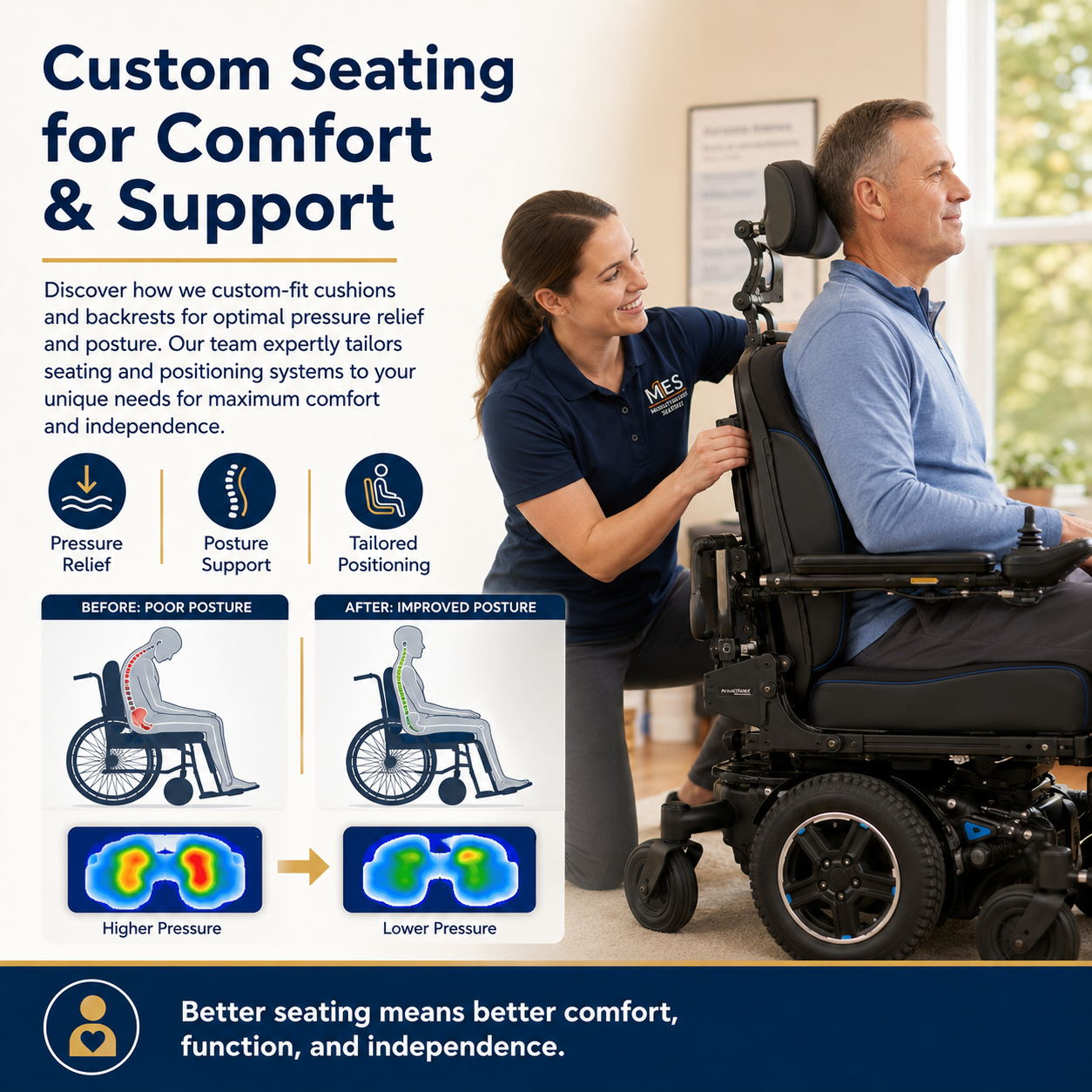
Pressure mapping uses a thin, flexible sensor pad placed between the patient and the wheelchair cushion. High-pressure areas appear as red or orange peaks on a computer screen, while low-pressure areas appear blue or green. This allows the ATP and therapist to make micro-adjustments to the seating system, tilt angles, or cushion type until dangerous pressure is eliminated.
Power Wheelchair Troubleshooting & Maintenance
A power wheelchair is a complex piece of heavy machinery that requires regular maintenance. When it breaks down, it is a medical emergency that severely limits the user's independence and puts them at risk for pressure injuries if they are stuck in bed.
Common issues to check before calling for service:
- Chair Won't Turn On: Check that the battery charger is completely unplugged from the joystick. The chair has an "inhibit" feature that prevents it from driving while plugged in.
- Flashing Joystick Lights: Count the flashes. The number of flashes is a diagnostic code that tells the technician what is wrong (e.g., a loose motor cable or a parking brake issue).
- Motors Engaged: Ensure the freewheel levers on the motors are in the "drive" position, not the "neutral/push" position.
If your chair has battery degradation, motor faults, or seating system failures, do not attempt to fix it yourself. Unauthorized repairs can void your warranty and jeopardize future Medicare coverage. Contact a certified repair technician.
Verified Clinical Sources:
- [1] MSKTC. "Preventing Pressure Sores." Read source
- [2] National Pressure Injury Advisory Panel (NPIAP). "Pressure Injury Stages." Read source